
Why we never use black henna
If it stains black in an hour, it is not henna.
4 min read · By Masuma, Henna Art by Masu
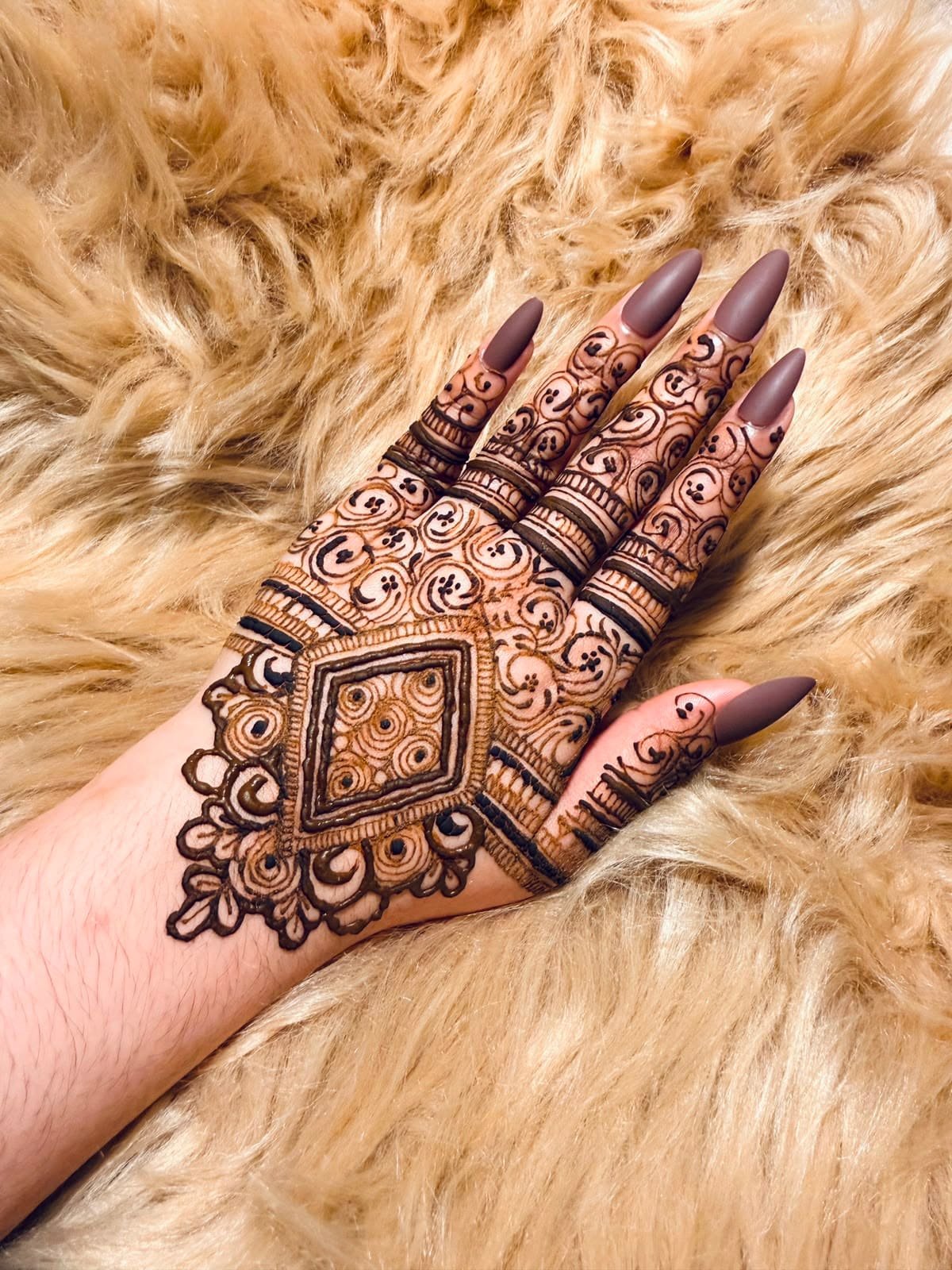
Real henna is a green-brown paste that leaves an orange stain, deepening to brown over two days. Anything that goes black quickly has been mixed with para-phenylenediamine, a hair dye chemical sold as black henna.
What black henna does to skin
PPD on skin causes chemical burns, blistering and scarring that can outlast the design by months, and it can leave a lifelong allergy to hair dye. It is not permitted in cosmetics applied to skin in the UK.
The reaction is rarely immediate. Itching, redness and raised blisters usually appear a few days after the design is drawn, often in the exact shape of it — which is why people do not always connect the two.
How to spot it
Ask to see the paste before it touches your skin. Natural henna is a muddy green or brown and smells earthy, or of the essential oils it was mixed with. Black henna is jet black and often has a sharp chemical smell.
Watch the timing too. A natural stain comes off the skin bright orange and takes a day or two to darken to brown or deep maroon. It never turns true black. If a design is black by the time you get home, it was not henna.
It turns up most often at holiday resorts, festival stalls and anywhere offering henna tattoos very cheaply and very fast.
What goes into our cones
Every cone used here is mixed in the studio from henna powder, lemon, sugar and essential oils. Nothing else. If you have been offered black henna in Leicester for a party or a wedding, ask what is in the cone.
Questions
Is black henna safe?
No. The black colour comes from PPD, a hair dye chemical that is not allowed in products applied to skin in the UK. It can cause burns, blistering and scarring, and a lasting allergy.
Is black henna the same as dark henna?
No. Natural henna can stain very dark on the palms — a deep reddish brown — but it gets there over a day or two and is never true black. Black henna is black straight away because it is not henna.
I reacted to black henna. What should I do?
Speak to a pharmacist or your GP. A PPD reaction can leave you sensitive to hair dye for life, so mention it before you colour your hair and always do the patch test on the box.
How do I know your henna is natural?
Every cone is mixed in the studio from henna powder, lemon, sugar and essential oils. The paste goes on green-brown and the stain comes off orange, then deepens over two days — which is how real henna behaves.
Organic henna only, mixed in the studio. Send your date and we will reply with availability.