Mehndi motifs and what they mean
Jaali, mor, paisley — what the language of a bridal design actually says.
5 min read · By Masuma, Henna Art by Masu
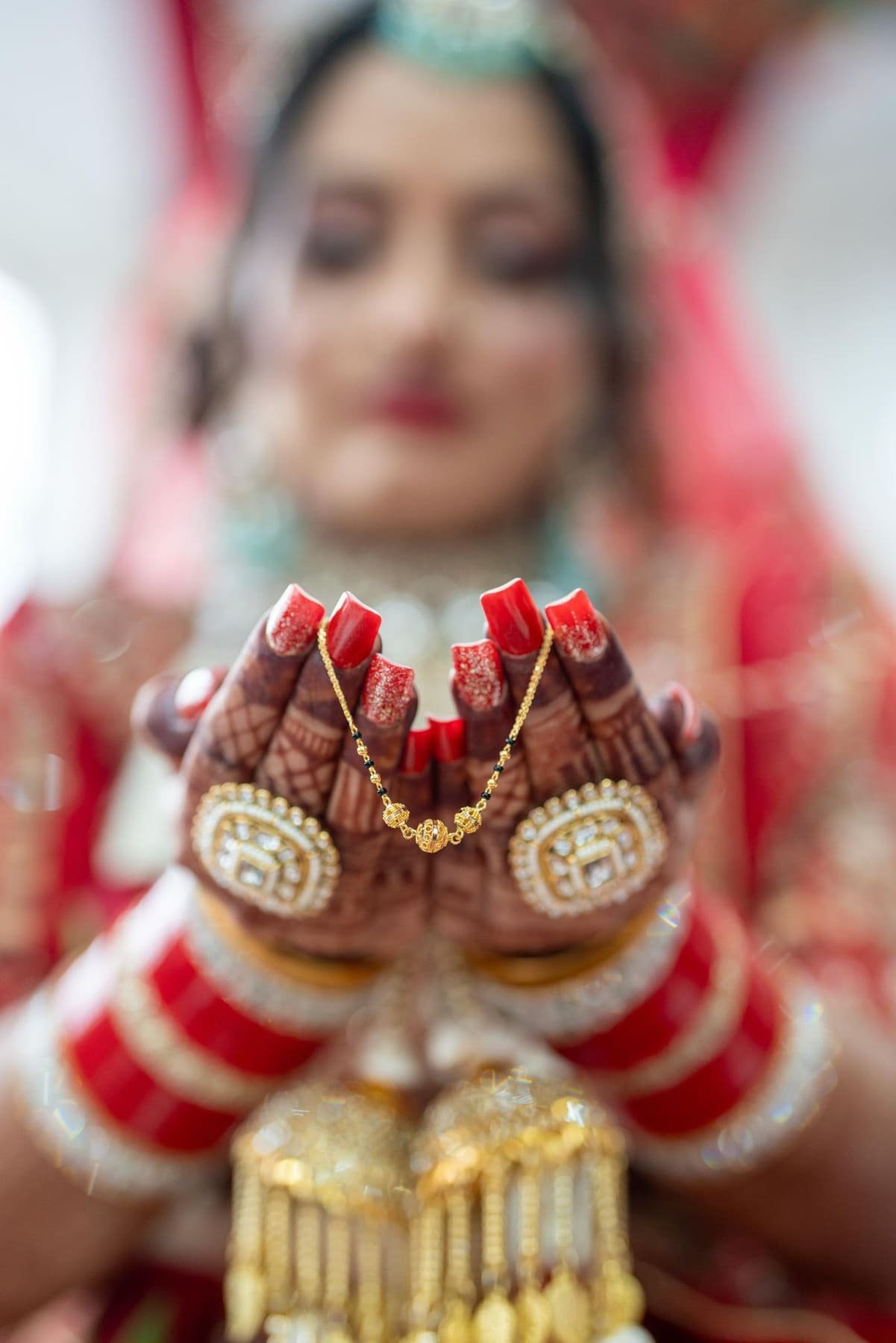
Jaali
Jaali is the lattice, the fine net that fills a panel without closing it. It carries light across the palm and gives a dense design room to breathe.
Mor, the peacock
The mor, the peacock, is drawn for the beginning of something — which is why it turns up so often in bridal work.
Paisley
Paisley curls out of Persian and Kashmiri work and is the shape most bridal borders are built from.
Lotus and mandala
The lotus is read as purity and new beginnings, and often sits at the centre of the palm. The mandala — a circle built outward in rings — stands for wholeness, and suits the back of the hand, where it can be drawn as one central piece.
Vines and leaves
Trailing vines and leaves are drawn for devotion and growth, and they do the practical work of joining one panel to the next — up a finger, around the wrist, along the forearm.
Names hidden in the design
Names, initials and small portraits sit inside these forms rather than beside them — worked into the jaali so they are found rather than announced.
It is an old wedding game: the groom's name hidden somewhere in the bride's mehndi, for him to find.
Questions
What does the peacock mean in mehndi?
The mor is drawn for beginnings, which is why it appears so often in bridal designs.
Can you hide a name in my mehndi?
Yes. Names and initials are worked into the jaali or a border so they are found rather than announced. Mention it at the consultation.
Do I have to choose the motifs myself?
No. Bring what matters to you — photographs, jewellery, names — and the motifs are chosen around it in a drawn proposal before the day.
Bring the motifs that matter to you to the consultation. Send your date and we will reply with availability.